
-
Peer feedback

Peer feedback provides invaluable perspectives on how great it is to work with a person and how they contribute to the team as a colleague.While managers often evaluate the final product, your peers see the nuances—the collaboration, the support, and the hidden efforts that drive long-term success. By embracing these perspectives, you evolve from an…
-
Noise is no signal

Process the noise before seeking the signal.By intentionally pausing to process the “noise” of workplace dynamics, you prevent reactive decisions based on surface-level data. This discipline allows you to filter out distractions and identify the true signal—the core issues and opportunities that others often overlook.What is one specific technique you use to stay objective when…
-
Behavior broadcast

Behavior is your loudest broadcast.In the world of high-stakes leadership, your actions consistently drown out your words. While mission statements and strategy decks set the stage, it is your daily conduct that defines the actual culture and standards of your organization. Integrity isn’t found in what you promise during a keynote, but in how you…
-
Executive bubble

Leadership requires a relentless pursuit of unfiltered reality, as the higher you climb, the thicker the “information bubble” tends to become. When leaders lose proximity to the front lines, they begin making high-stakes decisions based on sanitized data and optimistic reports rather than the ground truth. Maintaining direct access to the raw, unvarnished challenges of…
-
Peer pressure

In the management landscape, we often overlook the “horizontal squeeze,” yet peer dependency is frequently the most rigid constraint on a leader’s velocity. While vertical pressure is expected from executives (expectations) or direct reports (emotional complexities and competence matters), peer-level friction creates invisible bottlenecks where cross-functional silos or misaligned incentives can effectively paralyze your progress.…
-
People don’t think what they say

People don’t think what they feel, they don’t say what they think and they don’t do what they say (Ogilvy) – and the same goes for colleagues.Human behavior is rarely a straight line, but rather a complex knot of unspoken emotions and filtered communication. We often witness a disconnect where internal anxiety transforms into external…
-
Consensus

The opposite of disagreement is not agreement. It is the consensus.Moving from disagreement to consensus doesn’t require everyone to share the same opinion, but rather to align on a shared outcome that respects individual needs. The classic orange debate illustrates this perfectly: instead of a compromise where both parties receive a useless half, a consensus…
-
Wellbeing
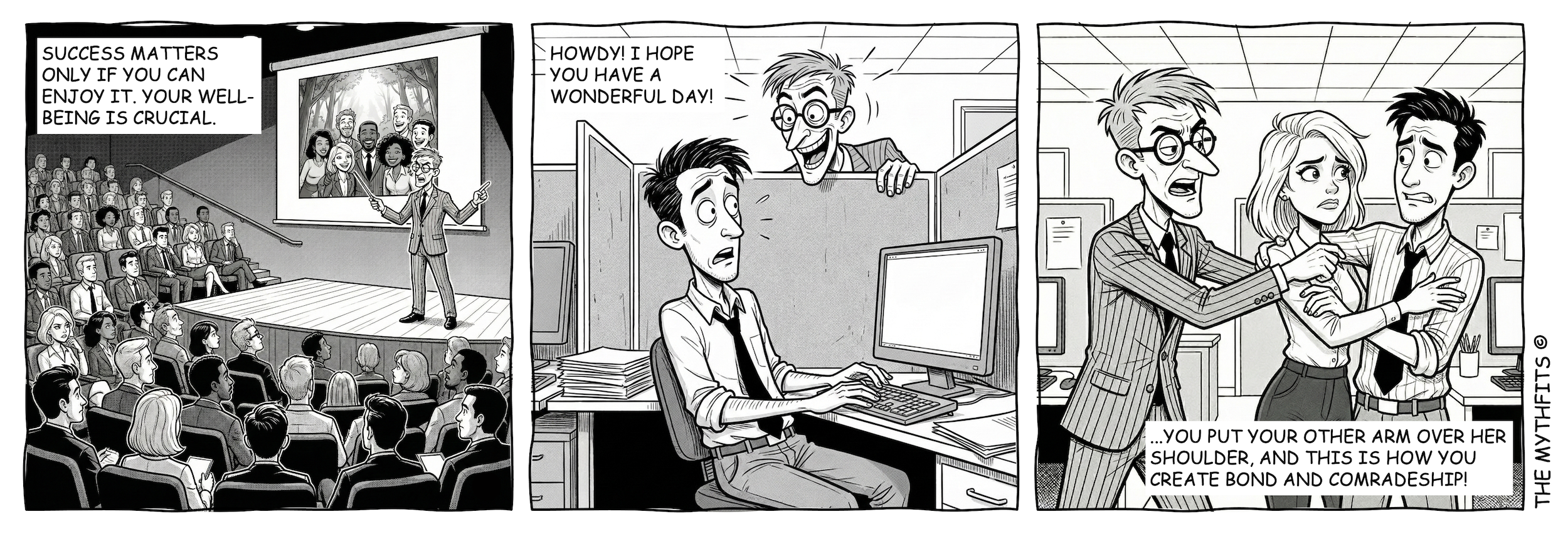
True leadership isn’t about wishing for employee well-being; it’s about architecting the culture that makes it possible. You cannot simply instruct a team to avoid burnout while simultaneously rewarding late-night emails and impossible deadlines. Your primary responsibility is to design sustainable workflows and embody the boundaries you want your team to adopt. Influence starts with…
-
Micromanagement

As a leader, your job is not to control other people; it’s to control yourself and trust that others will follow.Leadership is less about the authority you exert over others and more about the discipline you exercise over yourself. By shifting from a mindset of control to one of self-regulation, you create a high-trust environment…
-
Highlight reel
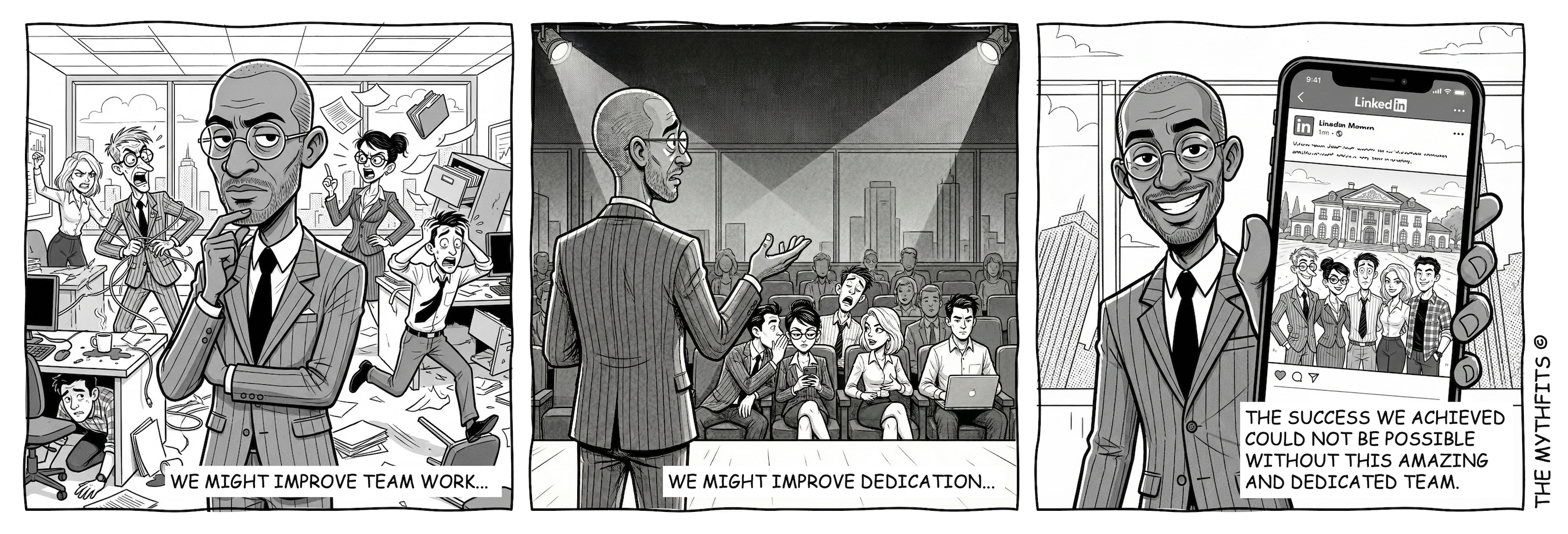
The polished cover of success and internal communications frequently shared on professional networks often masks the grueling reality of unresolved conflict and operational friction that defines true leadership. While public praise is essential, it shouldn’t overshadow the silent, messy work of navigating team pain and interpersonal tension that occurs behind closed doors. By over-indexing on…